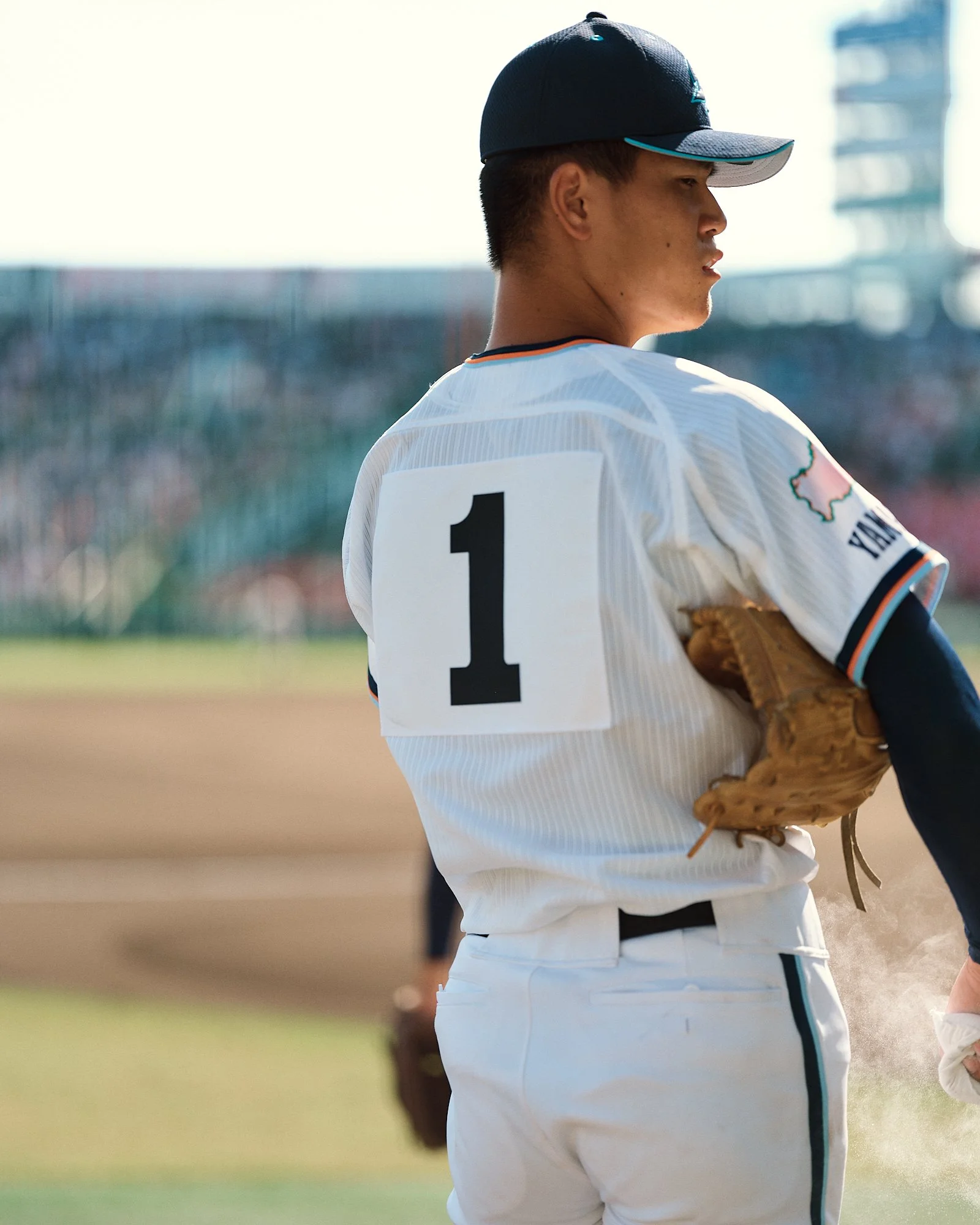
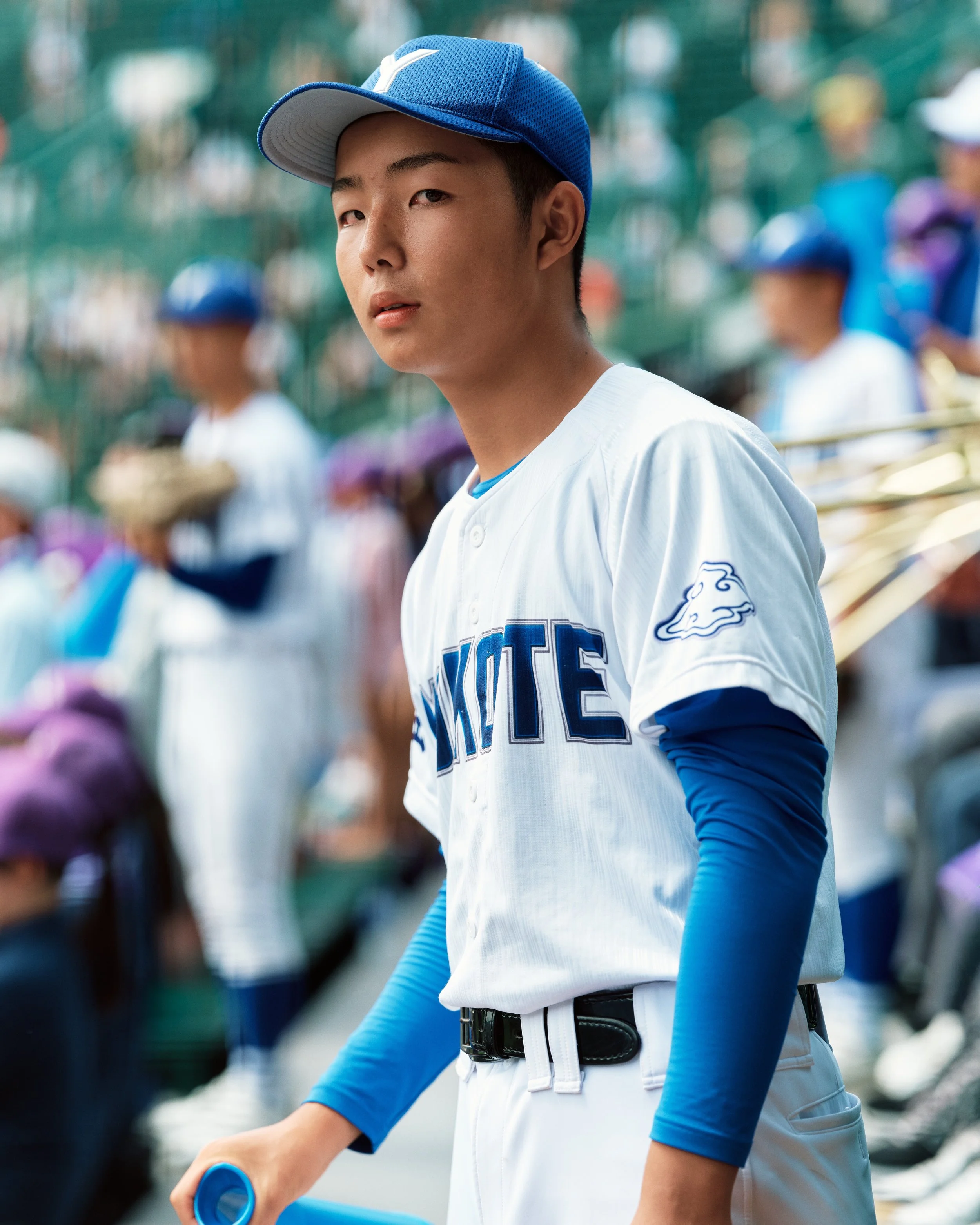
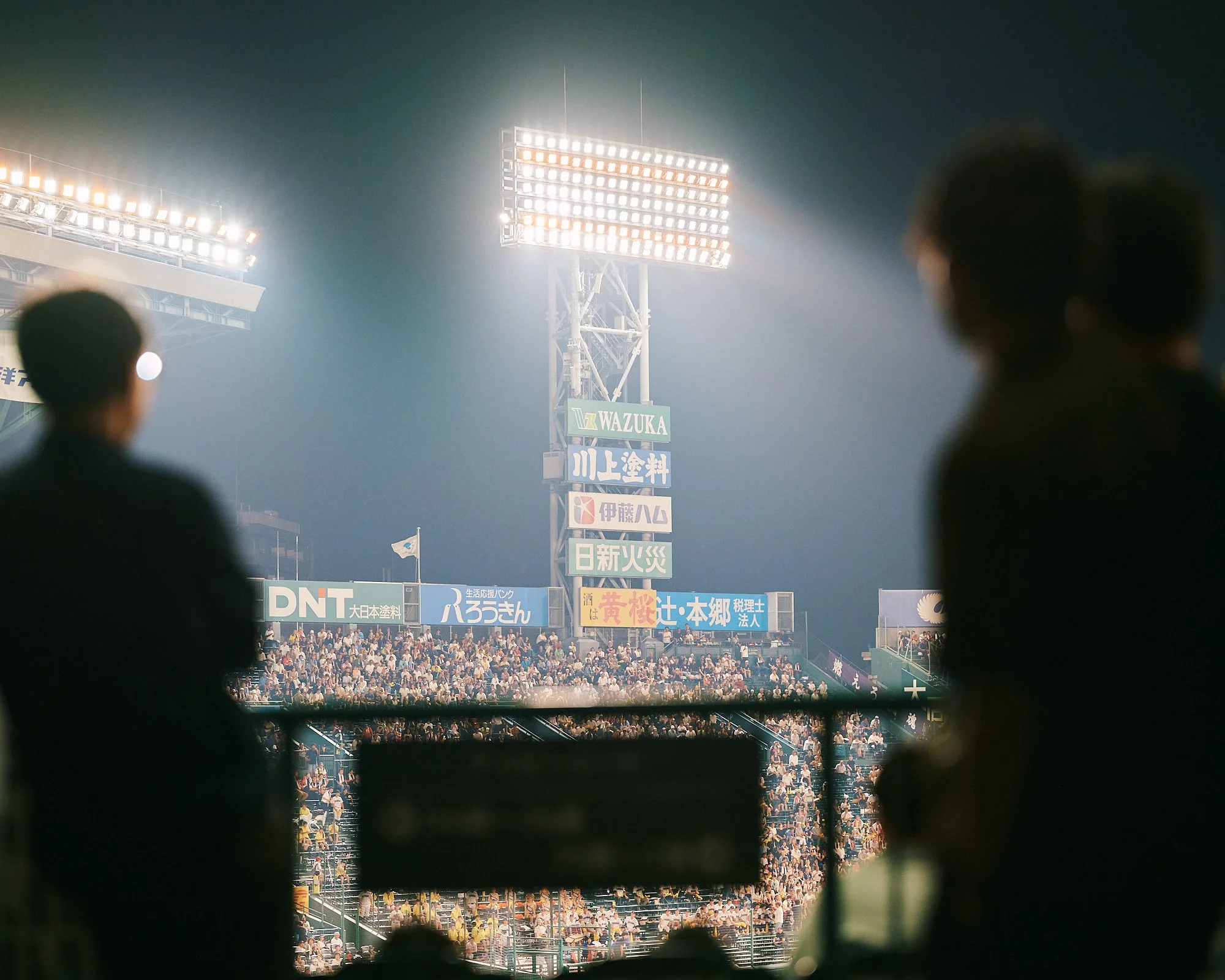
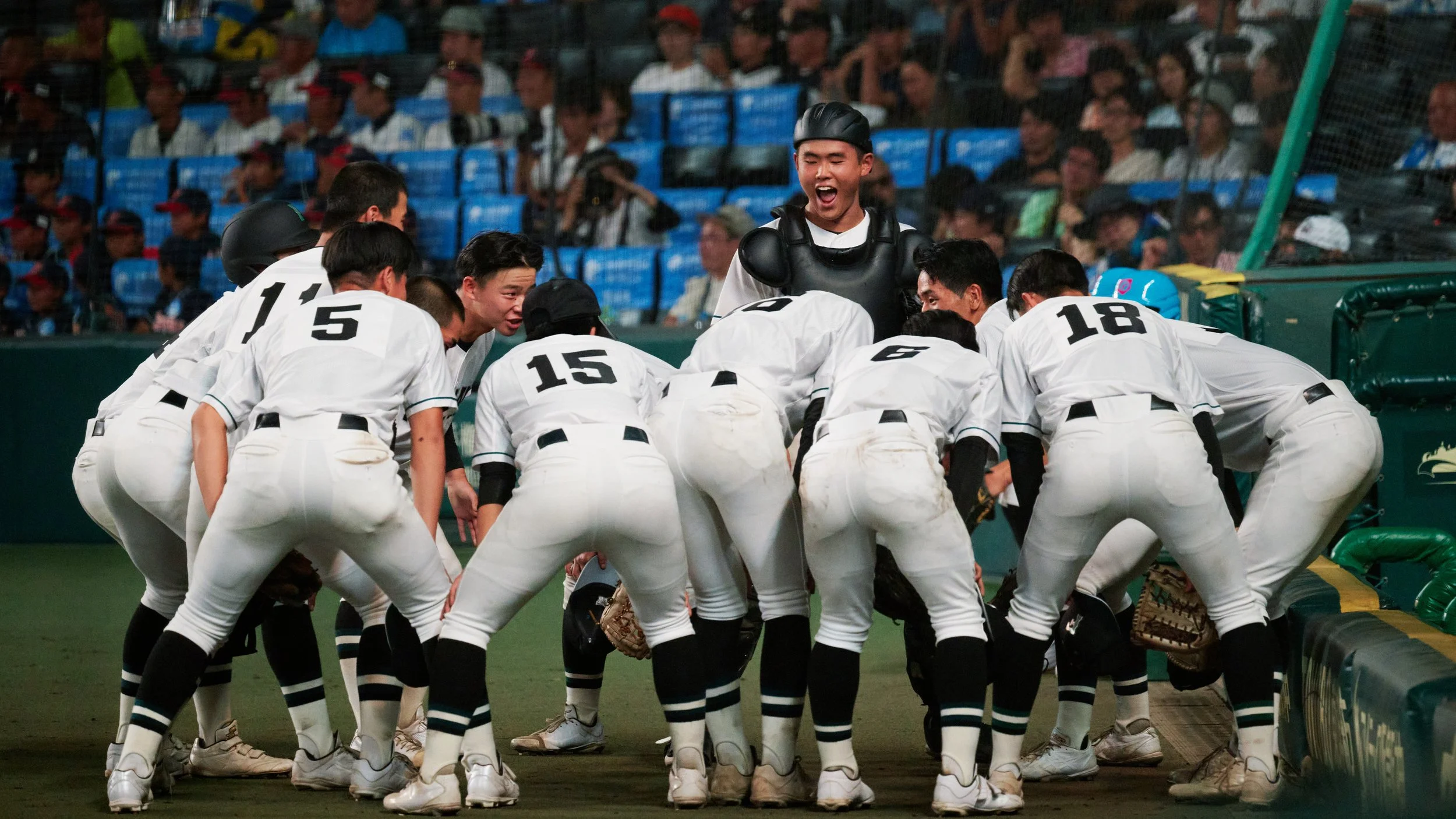
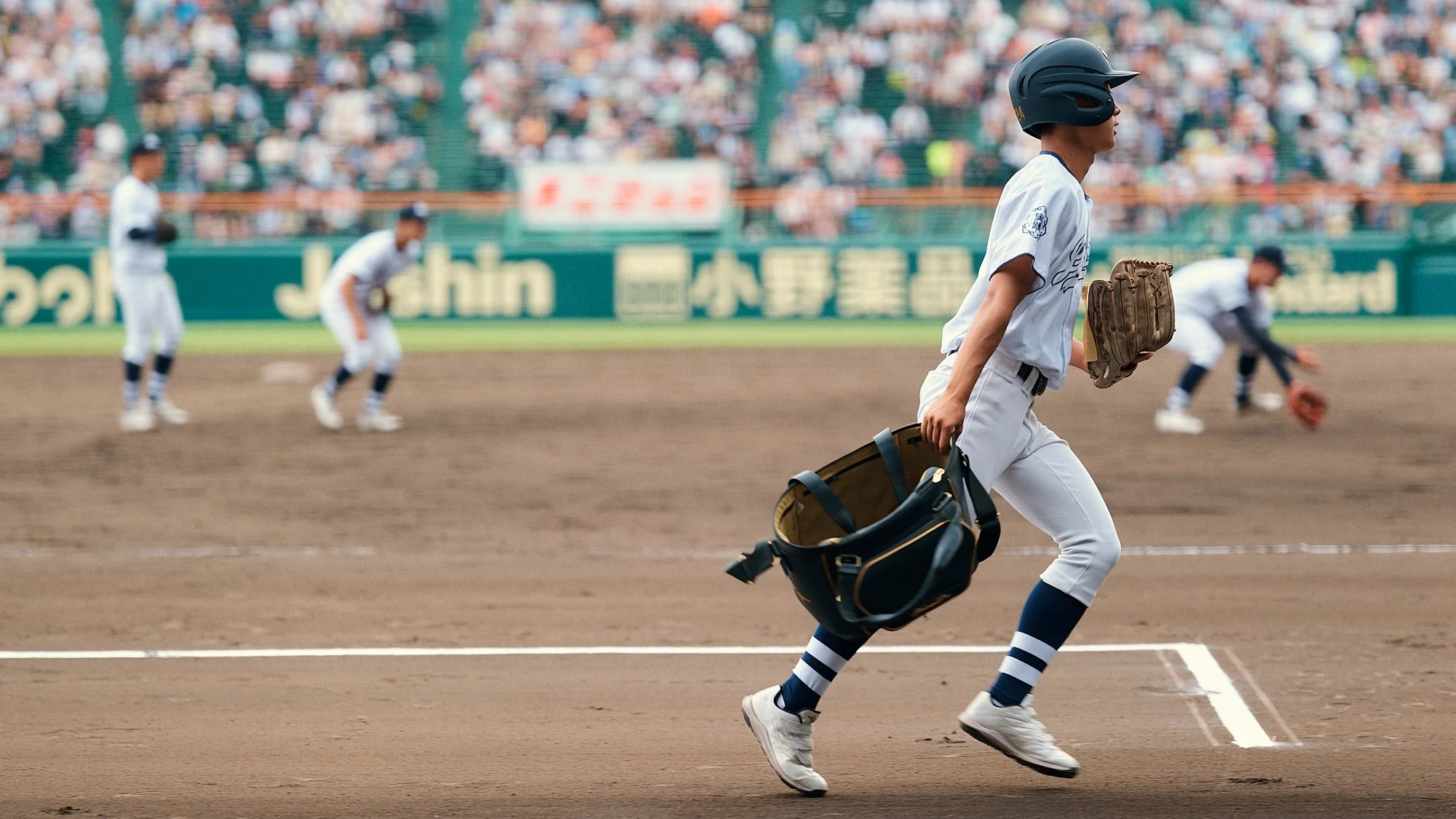
Thirteen days of sitting in the baking, thirty-five celsius sun while photographing around dugouts, grandstands, and fields made the 108th Japanese Summer Koshien High School Championship feel like a hazy, psychedelic fever dream. Four games are played every day from 8am to 9pm while players, fans and photographers like myself hide under towels attempting to block the blazing Osaka summer heat.
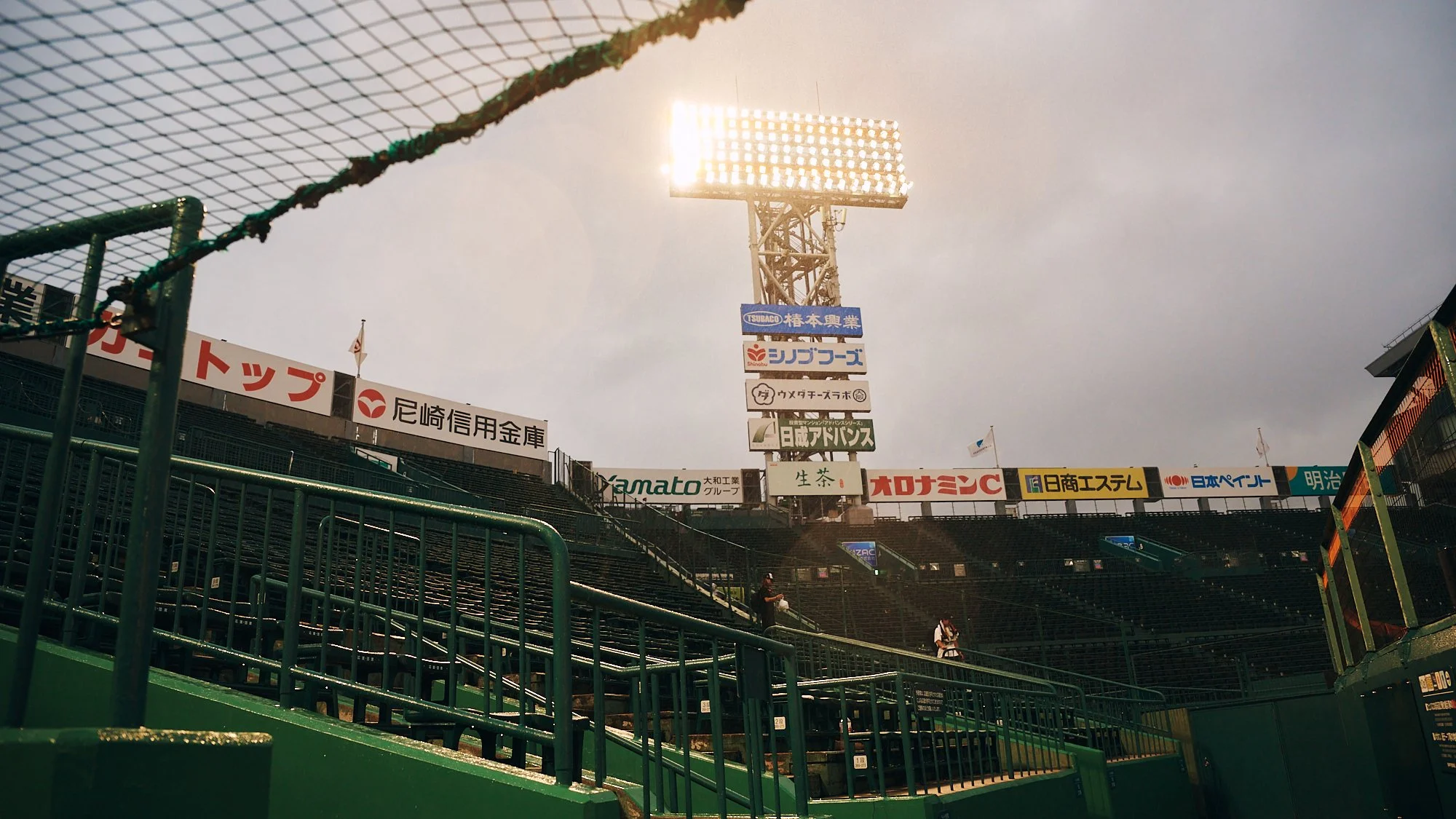
The Summer Koshien is Japan’s most premier yearly sporting event, selling out all 47,500 stadium seats for every game and boasting over 100 million viewers nationwide. Throughout Osaka the energy for the tournament is palpable: special limited high school baseball themed express trains take you directly to the stadium and memorabilia ranging from boxes of the stadium's famous curry to stuffed plushies of vendors’ ice bags are being hawked everywhere. The energy around Koshien Stadium is emboldened by the enthusiasm of the many people visiting or playing in Japan’s baseball mecca for the first time. Built in 1924, Koshien Stadium holds similar esteem to pantheonic early 20th century stadiums like Estadio Centenario or Fenway Park. Having survived earthquakes, fires, and World War II, the stadium looks nearly the same as it did 100 years ago. Normally Koshien Stadium is home to a professional team, the Hanshin Tigers, but the Tigers are kicked out during the High School Championship to make due for the crown jewel and original reason for the stadium.
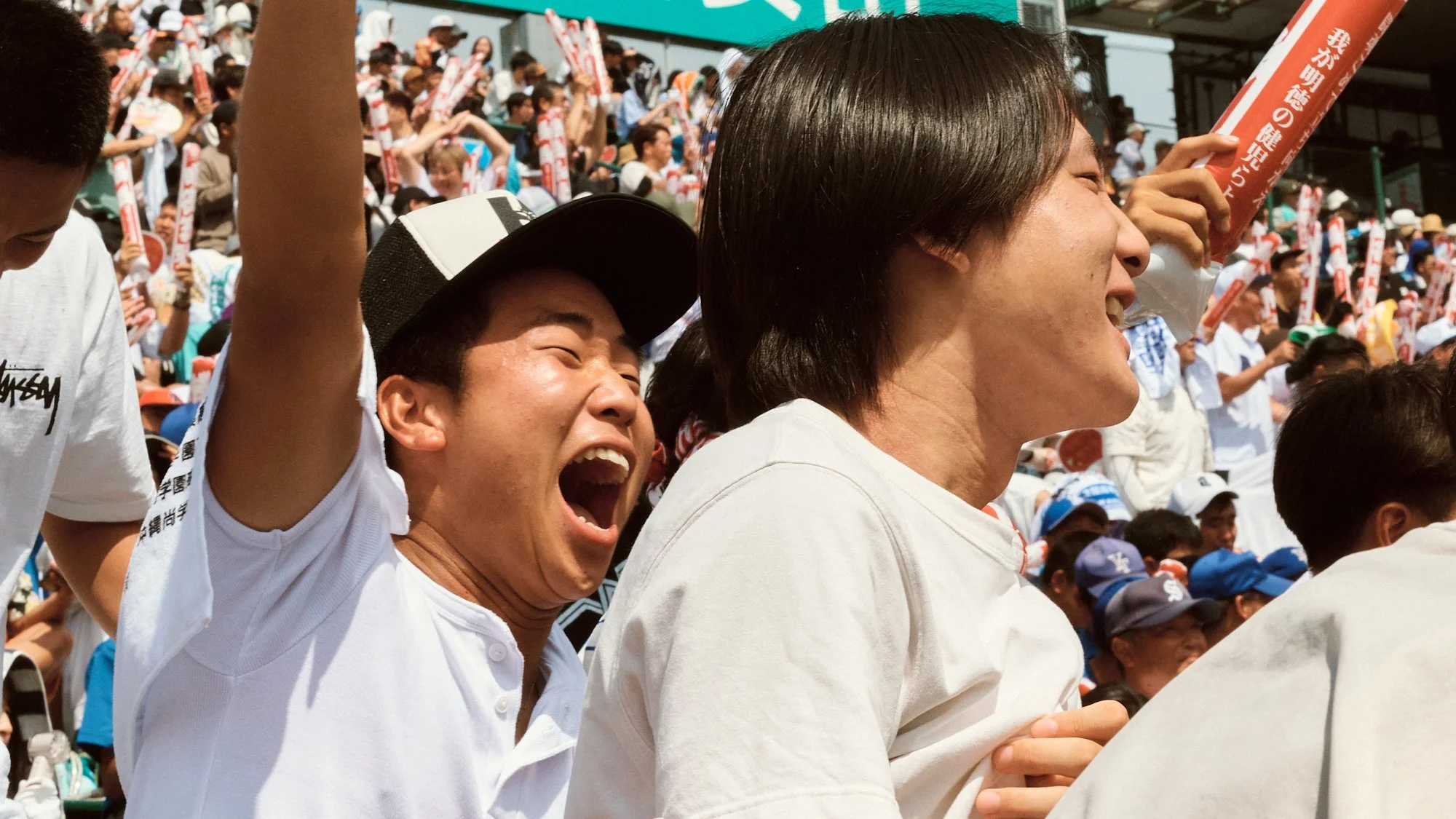
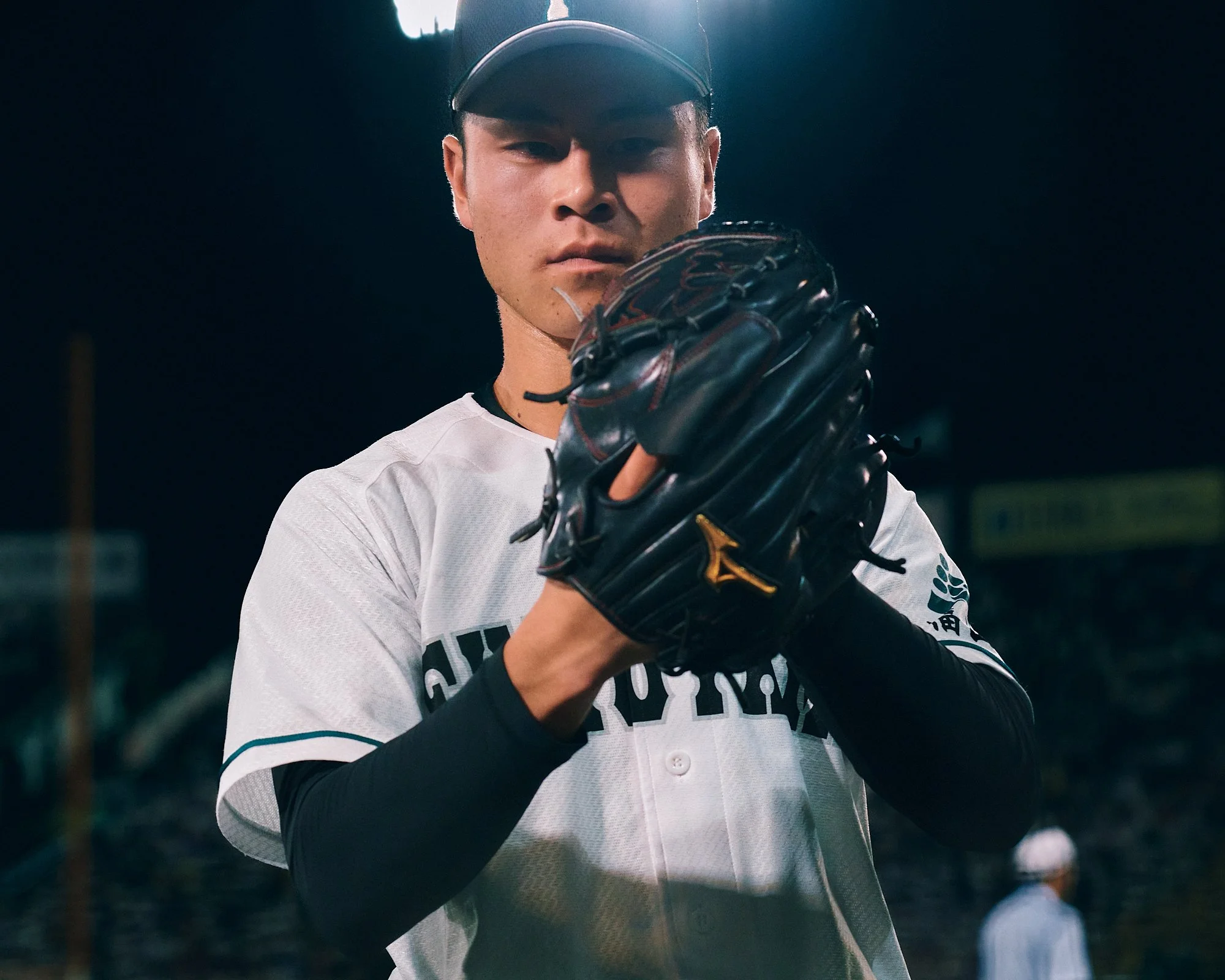
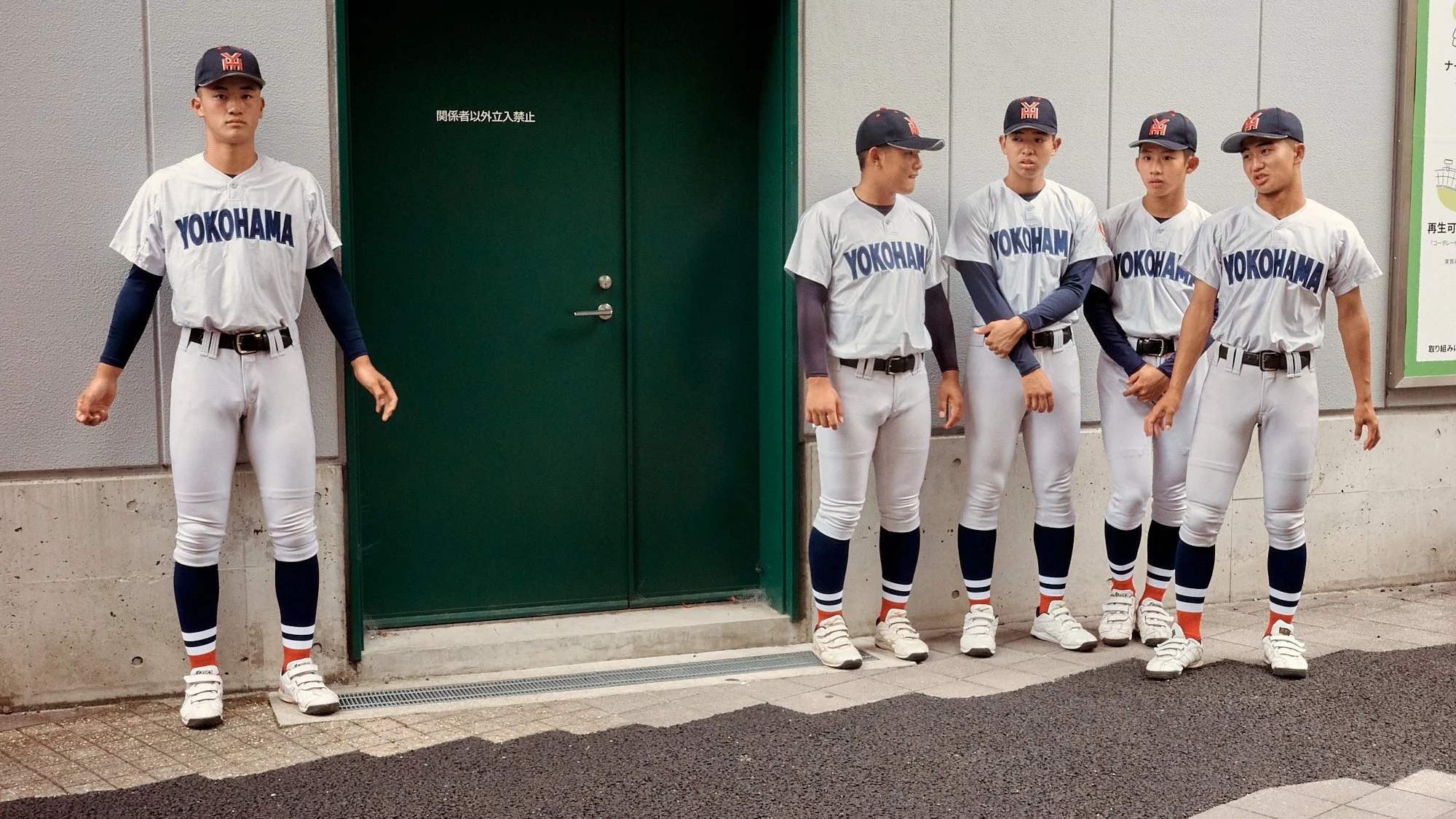
Each team represents one of Japan’s 47 prefectures with wildly different experiences in making it to the tournament. In the early rounds of the tournament talking with fans from perennial Koshien powerhouse Yokohama, they were relaxed and waiting for the quarterfinals knowing they had a 156 km/h throwing ace pitcher Shoki Oda. This stance only broke when Oda set the all time fastest pitch record mid-game, causing a reverberation of cheers around the Yokohama fans that superseded celebrations at any World Series games I’d been to. Conversely, the fans from Fukuyama Municipal enveloped me so much into their constant cheering and celebrations, it became hard to photograph. Hailing from the nearby Hiroshima prefecture, it was their first time ever making the tournament. Despite getting blown out during the game, Fukuyama Municipal fans were putting their arms around me, exuberant to just be at the tournament. I spent many a game trying to navigate bear hugs and beers while using my telephoto lens.
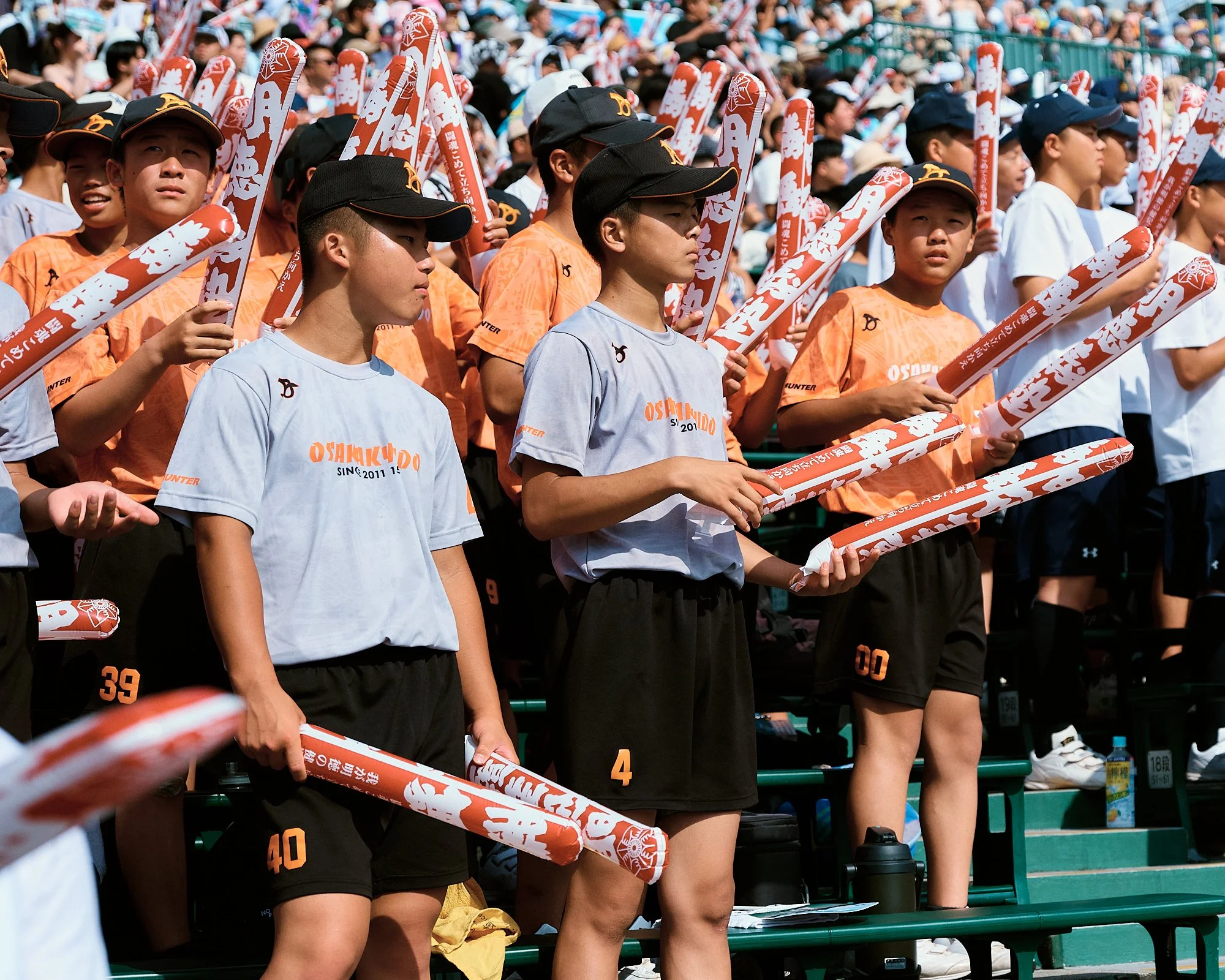
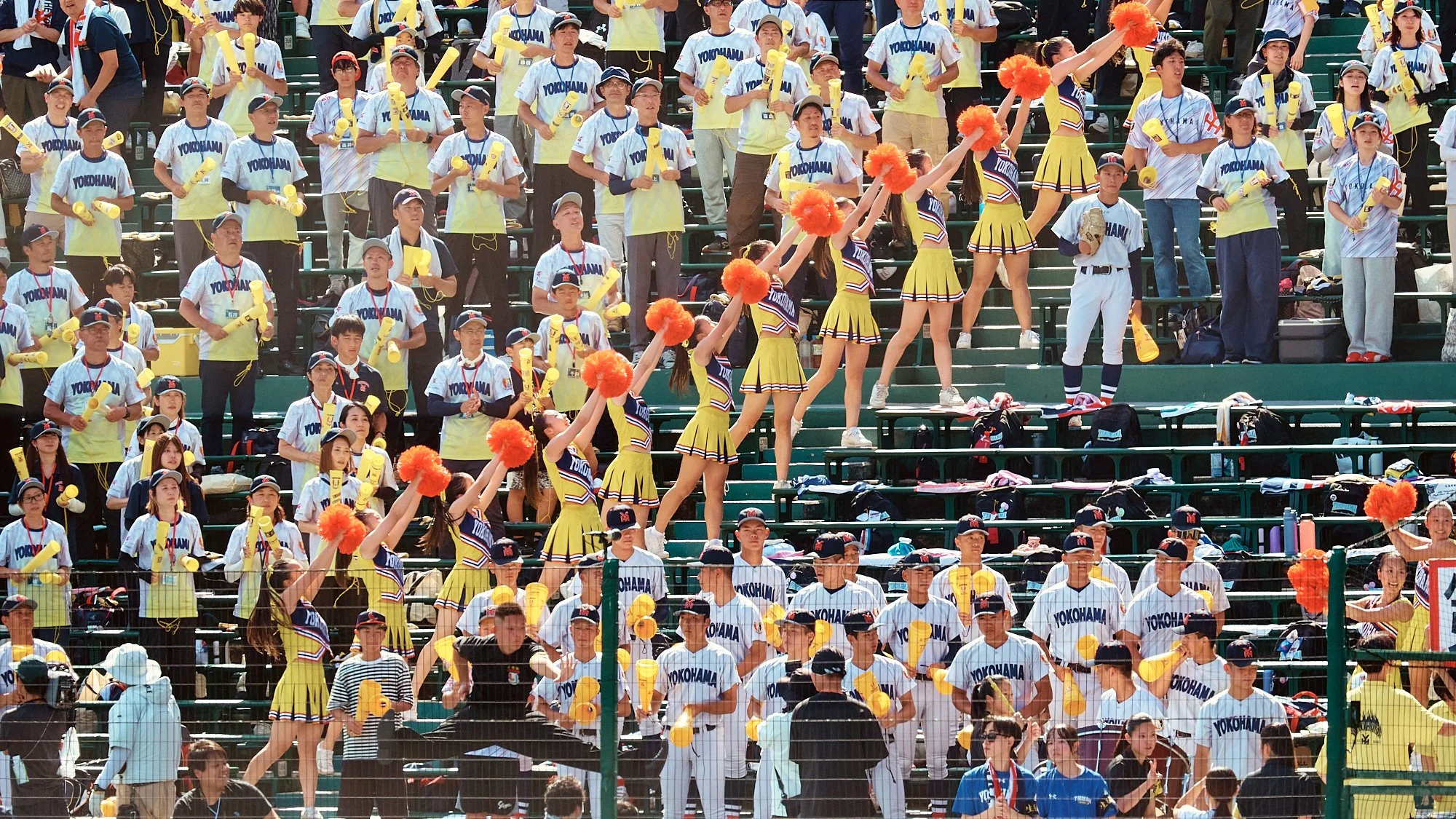
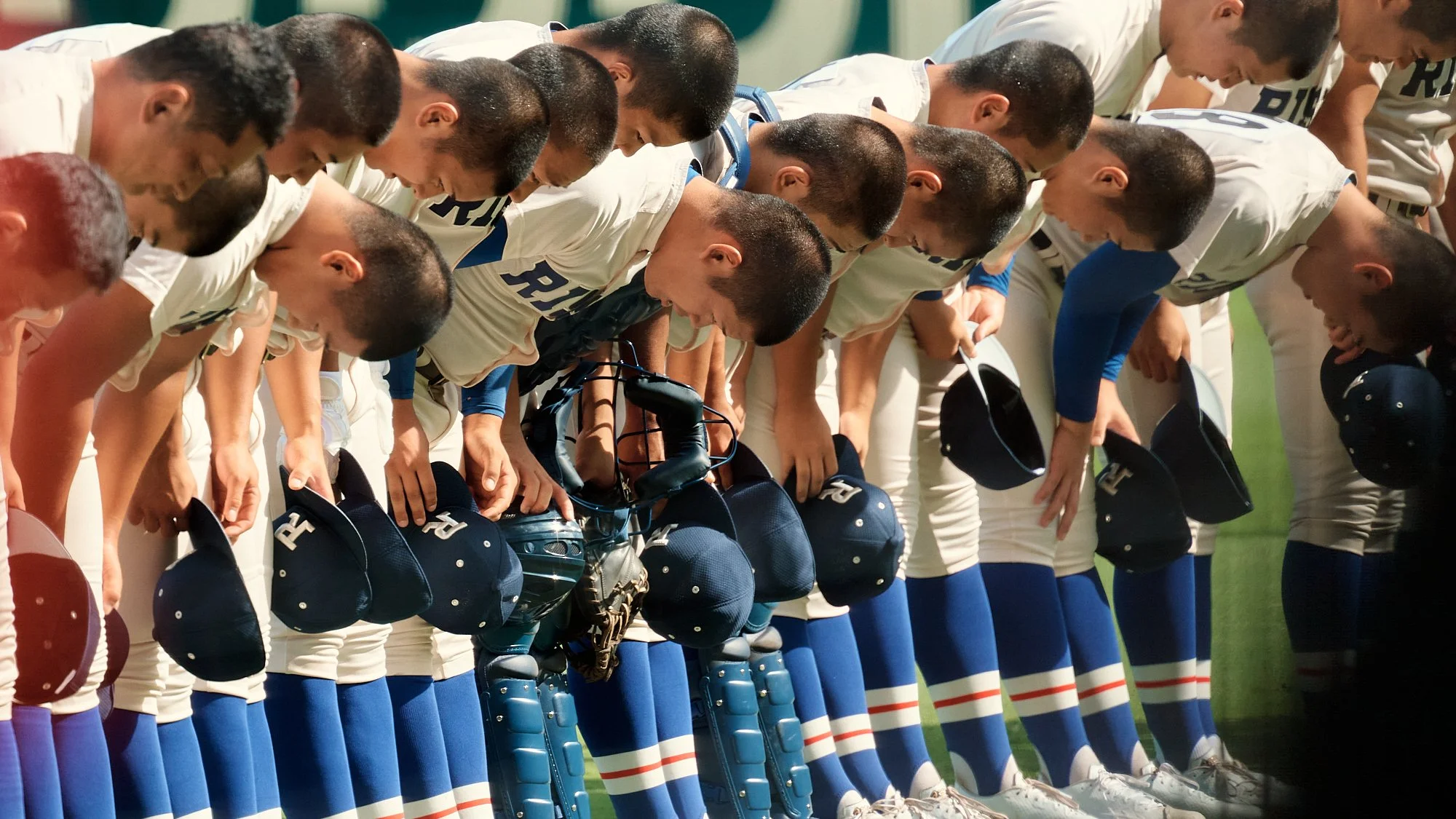
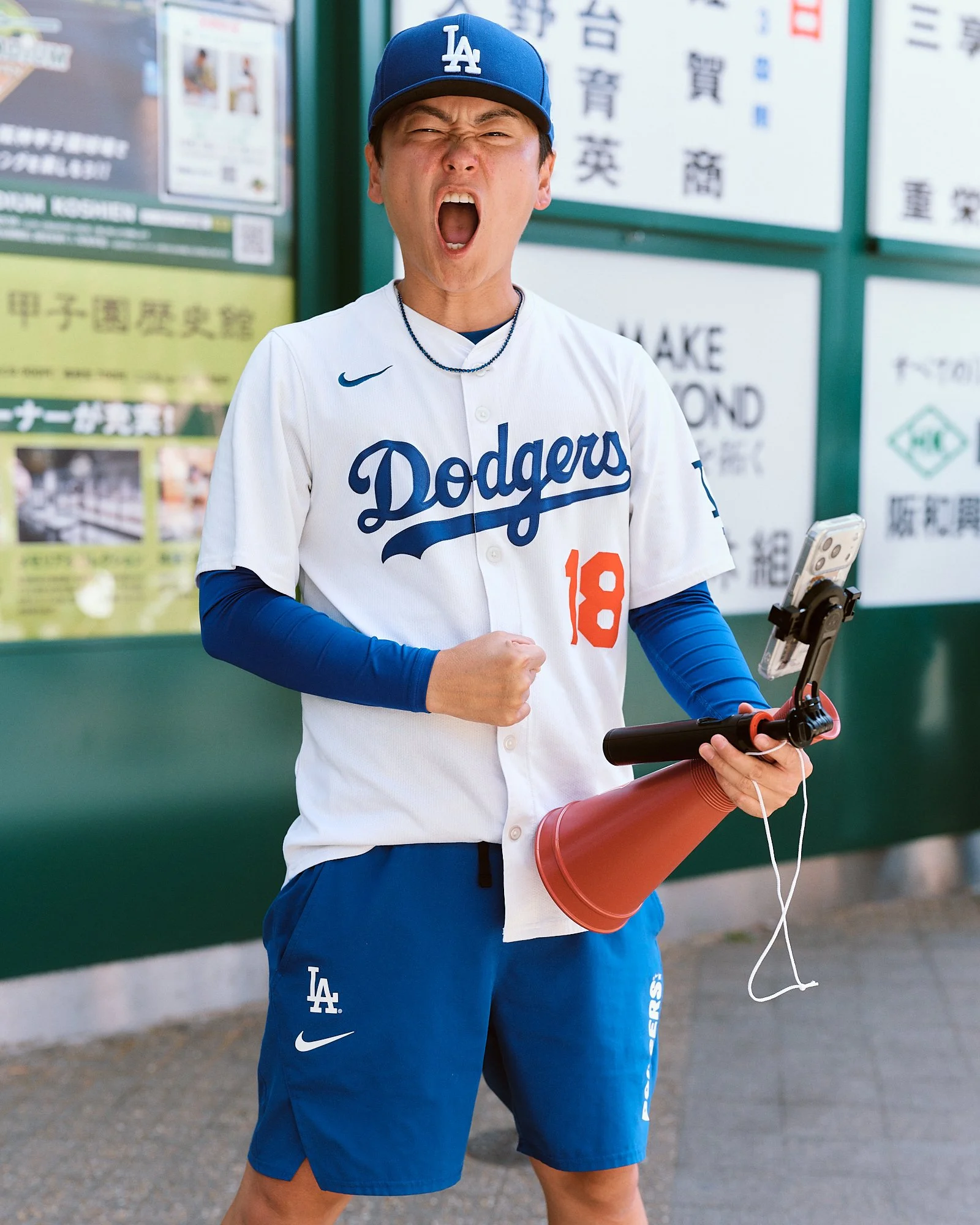
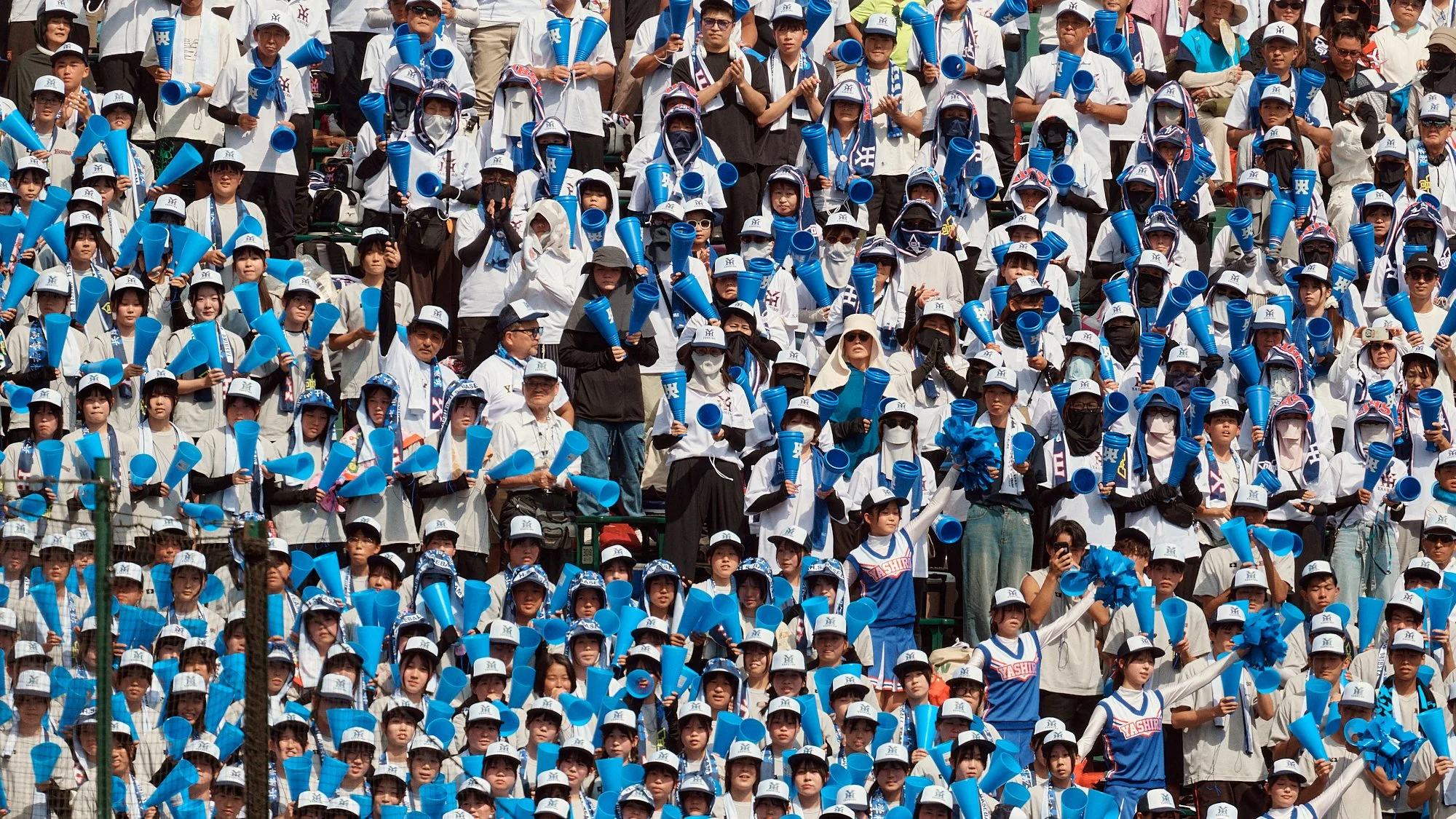
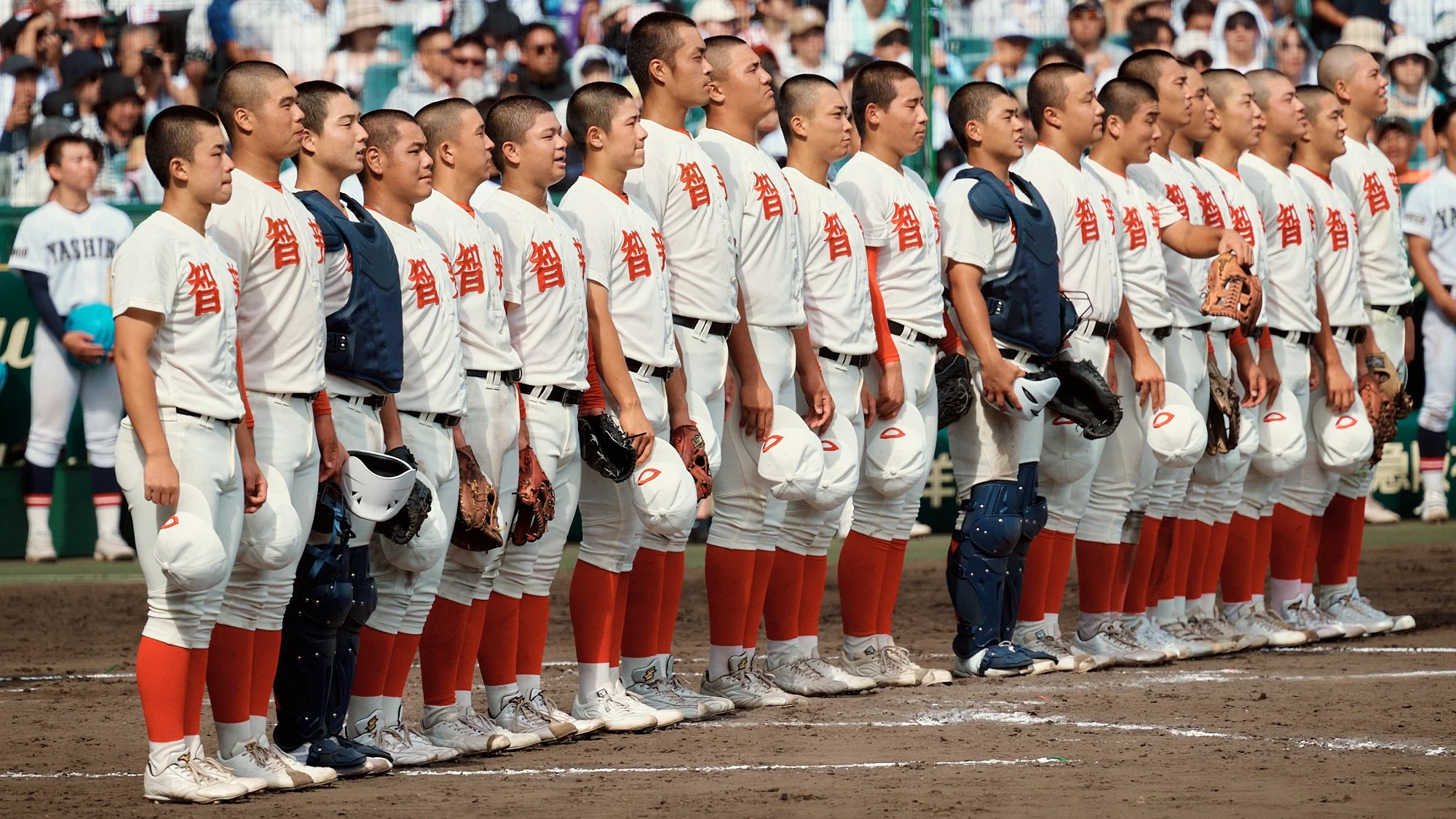
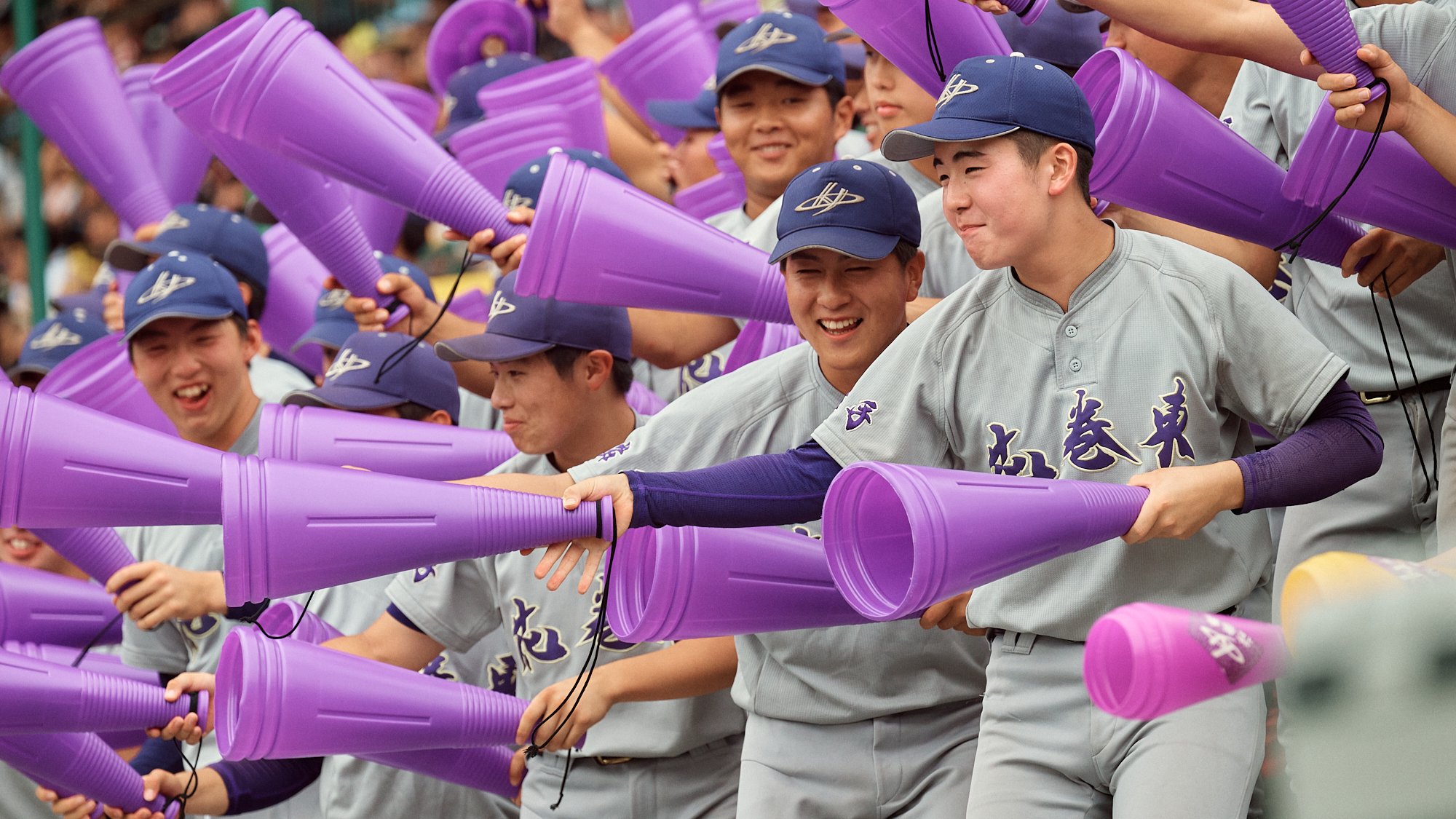
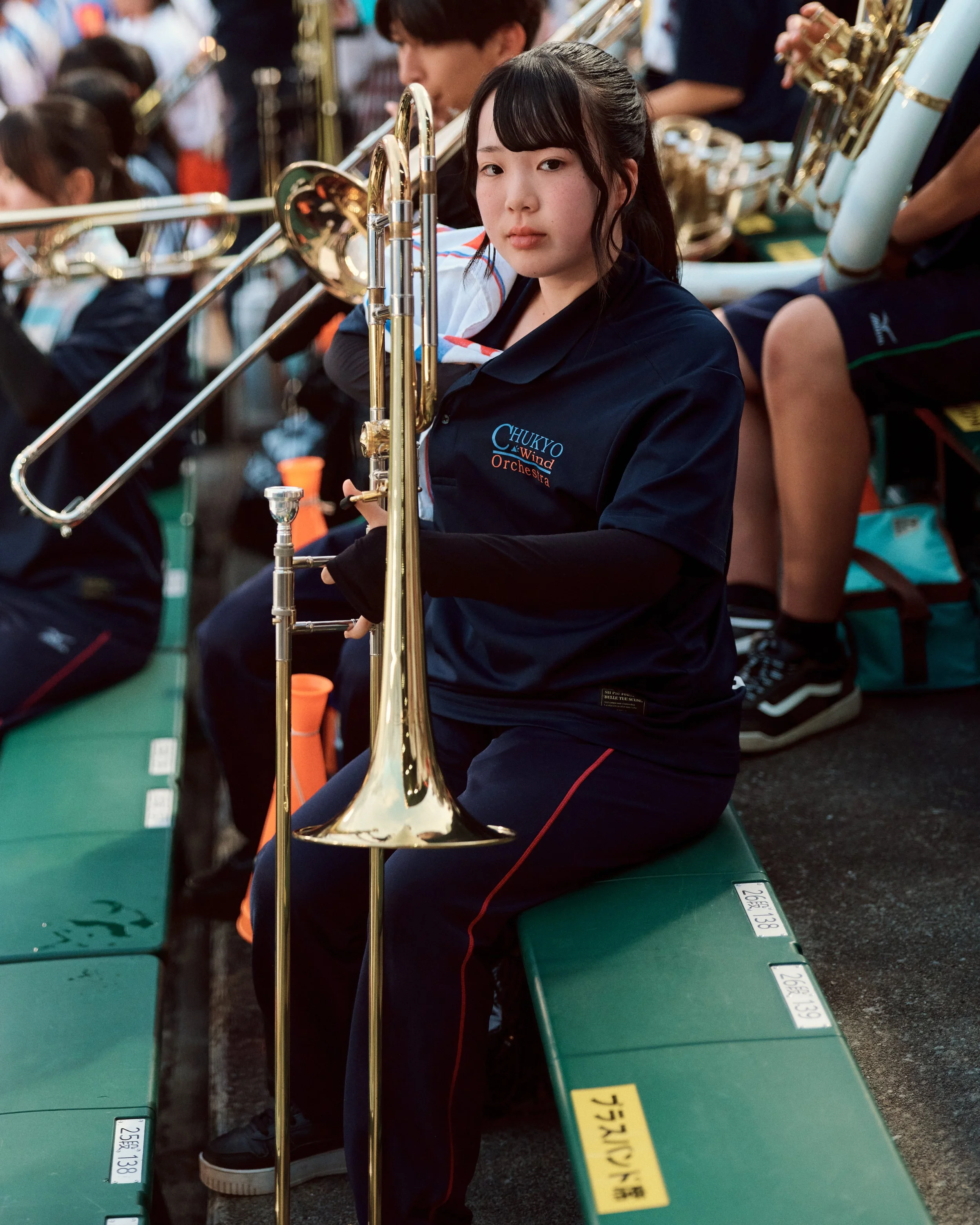
The tournament's importance means players aren’t the only ones who travel. While fans mostly sat in the main stands, a wide fenced off corner in either left or right field is a dedicated space affectionately called “the Alps”. The fans in these seats are known as the Oendan, comprised of a sixty to ninety piece brass band, cheerleaders, the junior baseball teams in full uniform, and thousands of the local teams’ fans armed with noisemakers akin to the vuvuzela horns often spotted at the World Cup. Each team has different songs they play. I remember being awestruck hearing a team play Florida State’s college football “War Chant” during a RBI single in left field. Win or lose, effusive celebrating or intense crying, every team’s fans press their face on the thick, rigid nets of the field’s fence to watch the team run out, bow and shout in a moving English crescendo– GOOD GAME!
Making it to and playing in this tournament is often the apex of a baseball player's career– and even life. Daisuke Matsuzaka, one of the early Japanese born pitchers to achieve stardom in America, is remembered more for pitching a shutout in the Summer Koshien final as a 17 year old than his World Series win. High school baseball in Japan is embedded with a military-like level of discipline and training. This includes rising at 5am to train up to 10 hours a day, shaving their heads before the tournament, and deep physical exertion in games that often leaves players injured. Players will allow any mental or physical maltreatment by their coach or peers to even reach Koshien, an often impossible task.
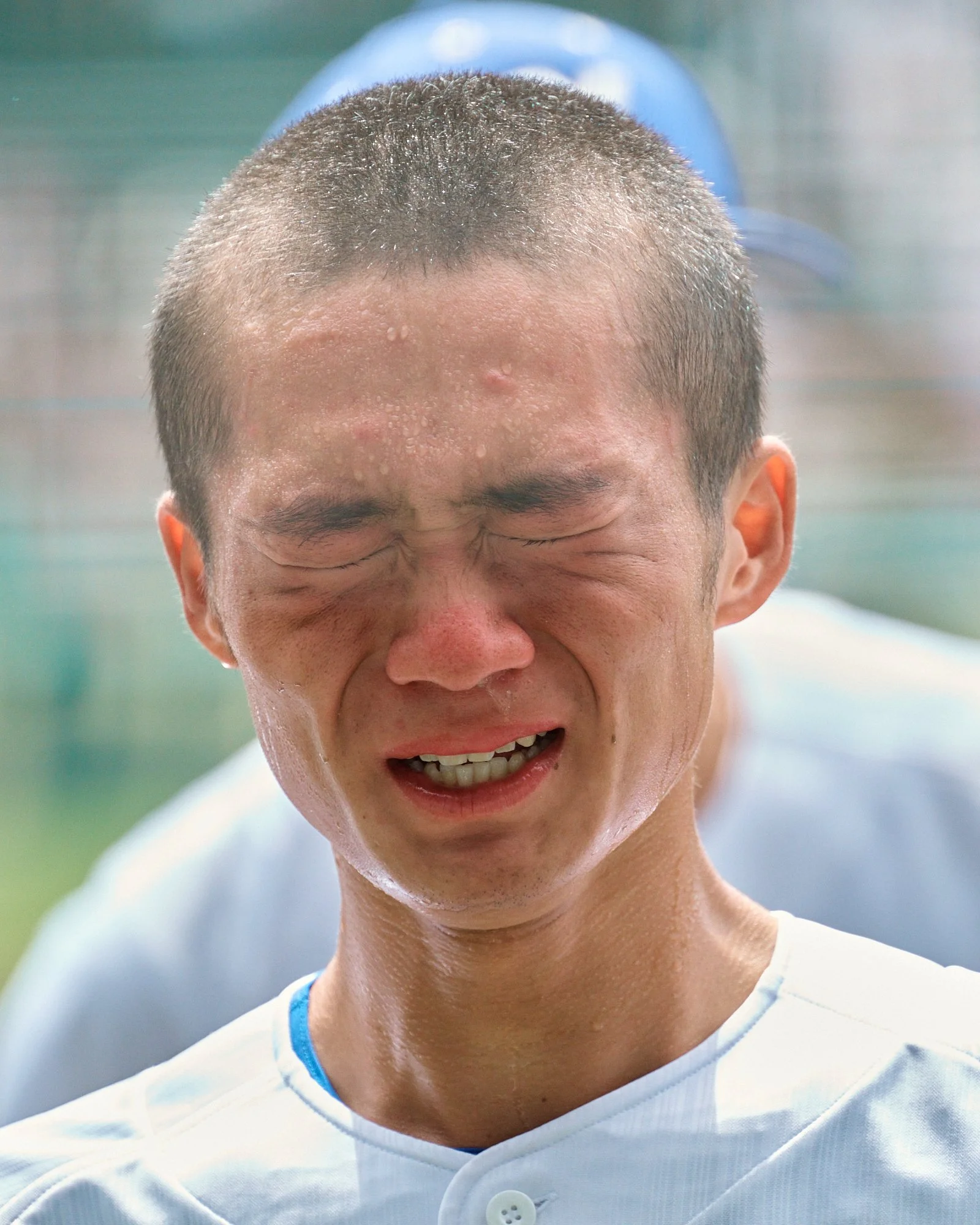
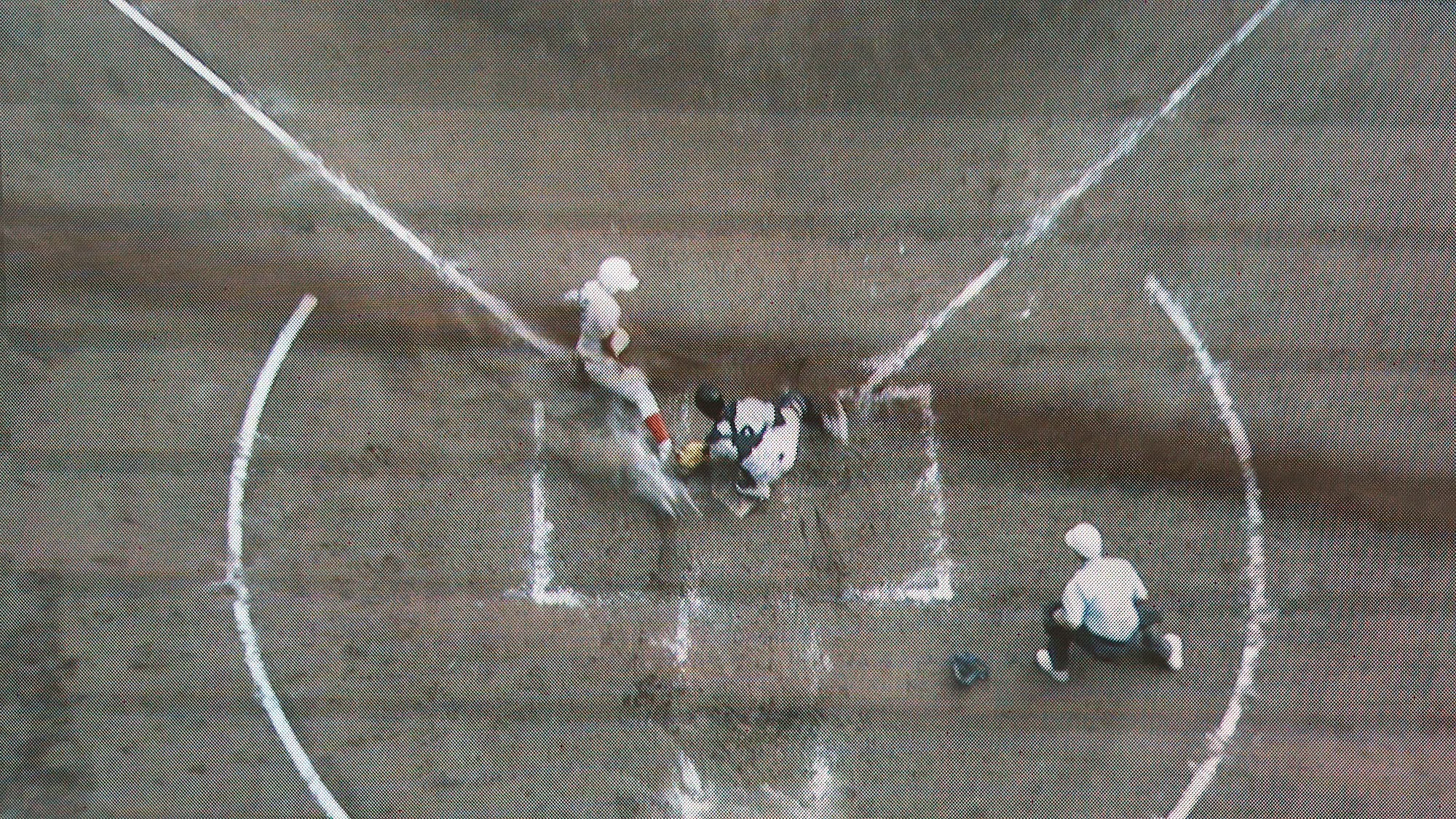
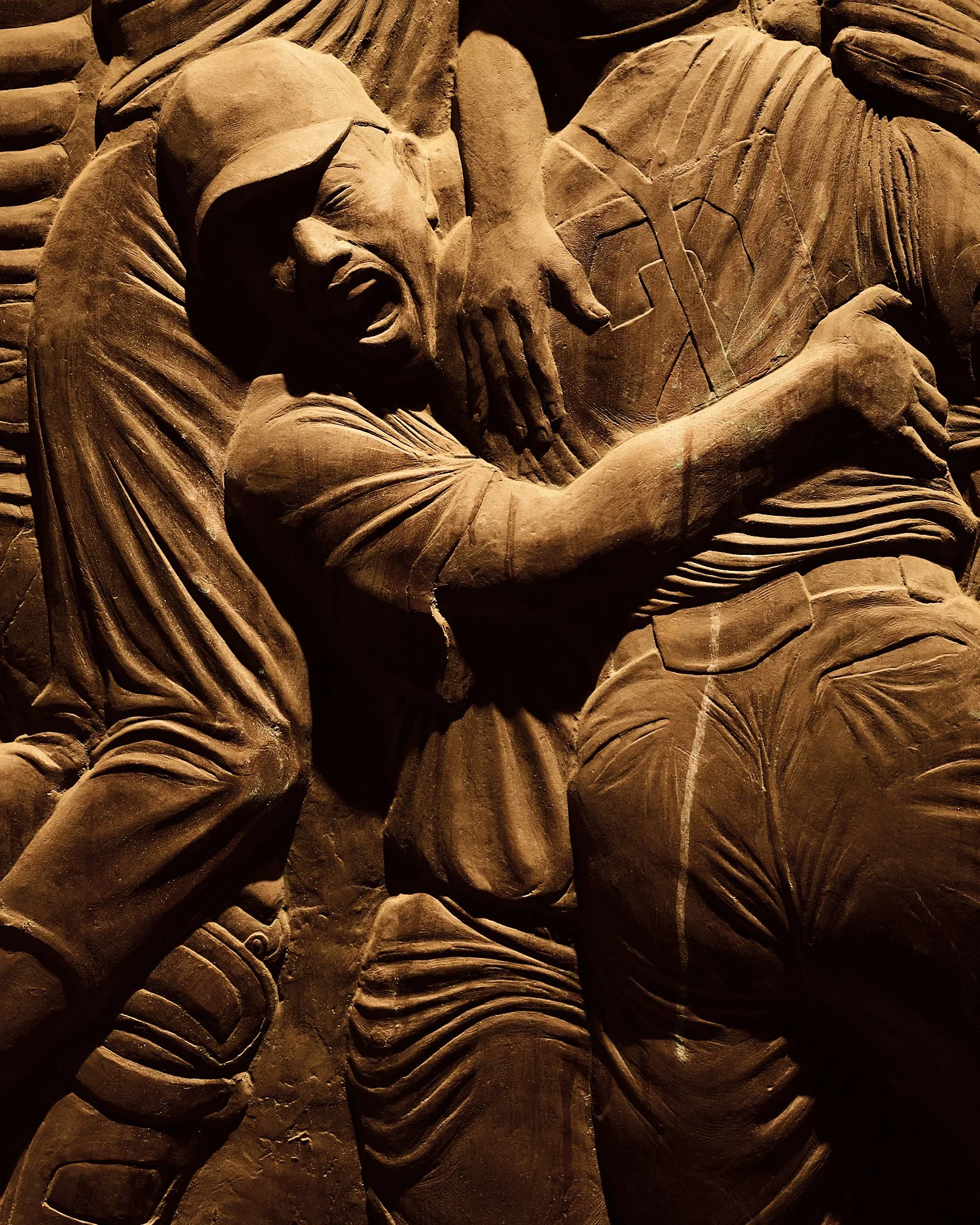
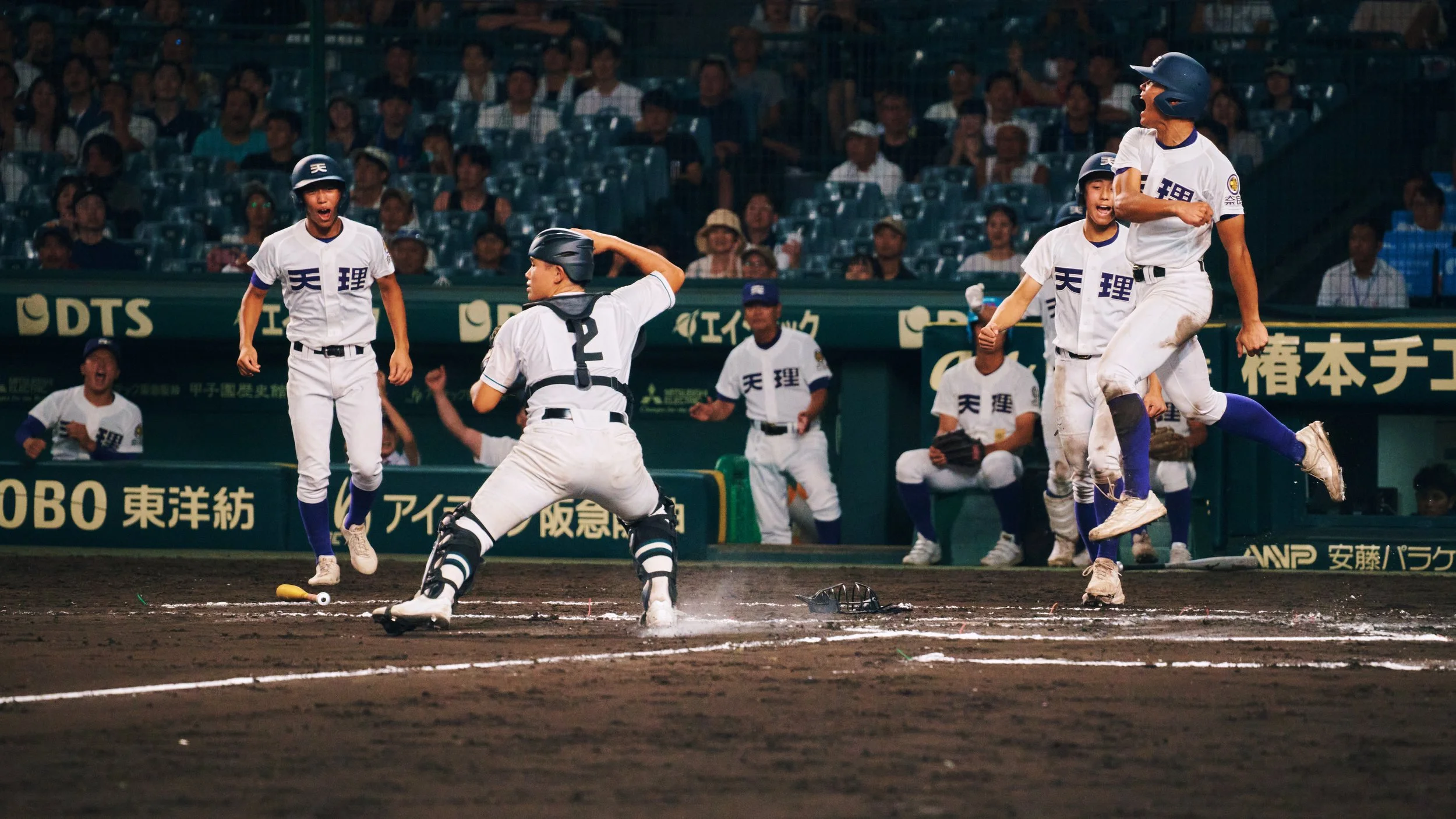
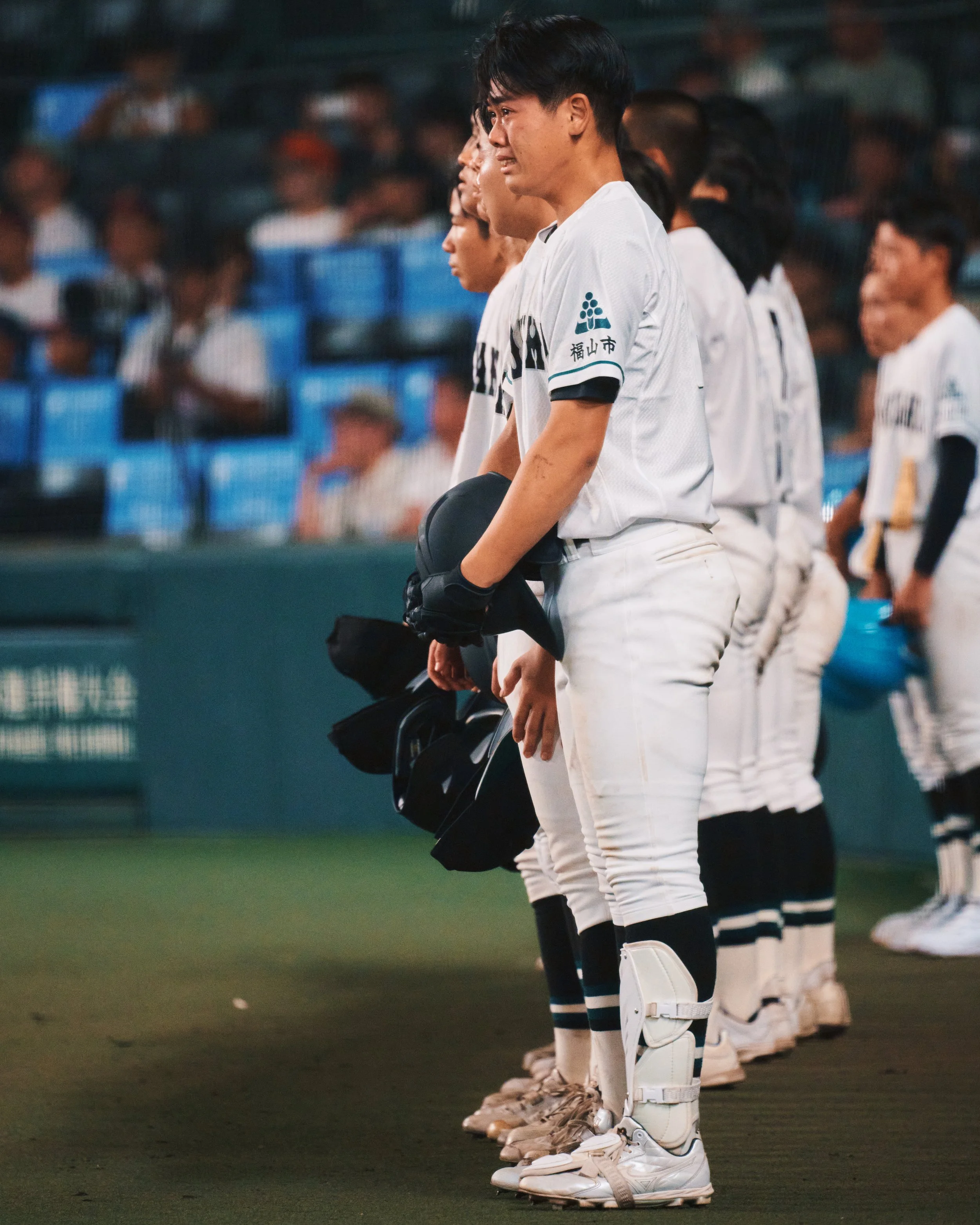
Players' preparations and intense coordination with one another often causes the games to resemble synchronized swimming instead of baseball. I watched players execute hit and runs without looking back at the pitch or batter as if they knew for sure where it was going. Catchers in between innings would stand arms outstretched while a group of four or five boys quickly puts on all their equipment akin to an F1 pit crew. Extreme emotional outbursts on both sides of the spectrum were common. Boys would jump up as high as they could fist pumping with their teammates on a routine scoring play but after losing they would break into paroxysmal crying fits unable to walk or stand. For many of these boys it will be their last time playing organized baseball.
After a loss, the players execute the most well known tradition of the Koshien tournament, sweeping dirt into a keepsake bag to take home with them. When I first witnessed this the players looked forlorn. Especially because while they swept the dirt, each team's ace pitcher would play catch, trying to look stoic as tears streamed down his face. However, as I learned more about this tradition from fans I spoke to, it was clear it held a greater significance to all the teams. Some of the dirt brought back is spread across the teams’ home field, which is said to conjure up luck in making Koshien the following year. It's a tradition that ties itself into the belief every sports fan, no matter the sport or nationality, has – Next Year is Our Year.